2002 Mini Cooper Base
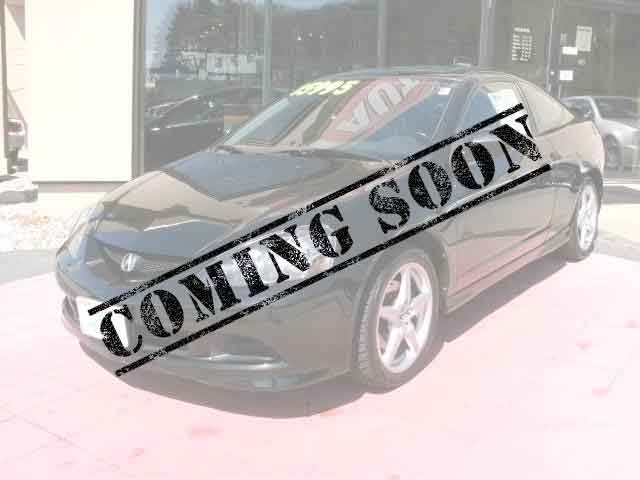
Premier Picks Auto Sales, IA
P:563-359-8044
- Mileage
- 50,496 Miles
- Engine
- 6-cylinder, 6 Cylinder
- Transmission
- 4 Speed Manual
- Fuel
- Gasoline
- Color
- Yellow
- Make
- Mini
- Model
- Cooper
- Model Year
- 2002
- VIN
- WMWRC33452TC33940
Mini is a British automotive brand owned by the BMW Group that has produced the successor of the original Mini in Oxford, England since April 2001. Currently three body variants are available: hatchback, convertible and Clubman., , The car, whose first generation was designed by Frank Stephenson, is drawing inspiration from the original Mini, which was manufactured by the British Motor Corporation and its successors from 1959 to 2000. The name of the car's brand, MINI, is all-capitalized to distinguish it from its predecessor., , , 2003 Mini Cooper S and Mk III classic Mini.The development of the first generation had been done between 1995 and 2001 by Rover Group in Gaydon, United Kingdom and BMW AG in Munich, Germany and was accompanied by continual contention between Rover and BMW. Especially the positioning of the car was contended. Rover wanted an economy car, whilst BMW supported a small sporting car and finally prevailed. In 1999 BMW assumed control over the whole project after BMW's CEO Bernd Pischetsrieder had left the company. When BMW divested itself of Rover in 2000, BMW decided to keep the Mini project and to build the car, which was originally to be built at Rover's Longbridge plant, the former production plant of the traditional Mini, at BMW's Oxford plant in Cowley, Oxford, United Kingdom, in what was historically the Pressed Steel Company body plant., , The 2001 to 2006 model years included four hatchback models: the basic "Mini One", the diesel-engined "Mini One/D", the sportier "Mini Cooper" and the supercharged "Mini Cooper S". The convertible was still based on the MK 1 until January 2009. Now, it is based on the MK 2., , There are numerous styling and badging differences between the models, perhaps the most obvious being that the Cooper S has a distinctive scoop cut into the bonnet. The Cooper S also has twin exhausts which exit under the centre of the rear valance. The (non-S) Cooper has more chrome parts than the Mini One and has a single exhaust. The Mini One D has no visible exhaust pipes at all., , In some markets, such as Australia and the US, only the Mini Cooper and Cooper S are sold because the Mini One's engine was considered to deliver insufficient power to run an air conditioner — a necessary feature in those markets. Almost fifty percent of all Minis sold in Australia and about seventy percent of those sold in the US are the top-of-the-range Cooper S model. Other models of note, sold in varying markets around the world, are the Mini Seven, Mini Parklane, Mini Check Mate, and Mini Monte Carlo., , The names Cooper and Cooper S echo the names used for the sportier version of the classic Mini which in turn come from the involvement of John Cooper and the Cooper Car Company. The Cooper heritage is further emphasised with the John Cooper Works (JCW) range of tuning options that are available with the Mini. John Cooper also created a one-off racing model of the Mini Cooper S named the Mini Cooper S Works. This car features many extras which help to improve performance, such as a racing exhaust and air filter as well as uprated suspension. The car also has one-of-a-kind 17-inch racing wheels., , , A 2006 Mini Cooper S Checkmate.The "Mk I" Mini One, Cooper and Cooper S used a Brazilian-built Chrysler-designed Tritec engine, while the Mini One D used a Toyota-built diesel engine. In August 2006, BMW announced that engines would in future be built in the UK, making the car essentially British-built again, with final assembly at Cowley and the body pressings being made in nearby Swindon at BMW's Swindon Pressings Ltd subsidiary., , It uses a transversely-mounted four-cylinder engine driving the front wheels. All four wheels are pushed to the corners of the body. The styling of the car, like that of the Volkswagen New Beetle, is a retro design that is deliberately reminiscent of the original Mini with contrasting roof colours, optional bonnet stripes
- 2 Door
- 2 Wheel Drive
- Manual Transmission
- Alloy Wheels
- Fog lamps
- Splash guards
- Spoiler
- Sun/Moon Roof
- Air Conditioning
- Bucket Seats
- Cruise Control
- Heated Mirrors
- Heated Seats
- Leather Seats
- Power Door Locks
- Power Mirrors
- Power Steering
- Power Windows
- Rear Defrost
- Tinted Windows
- Alarm
- AM/FM Radio
- Anti-theft
- CD Player
- Trip/Mileage Computer
- Antilock Brakes
- Driver Air Bag
- Passenger Air Bag