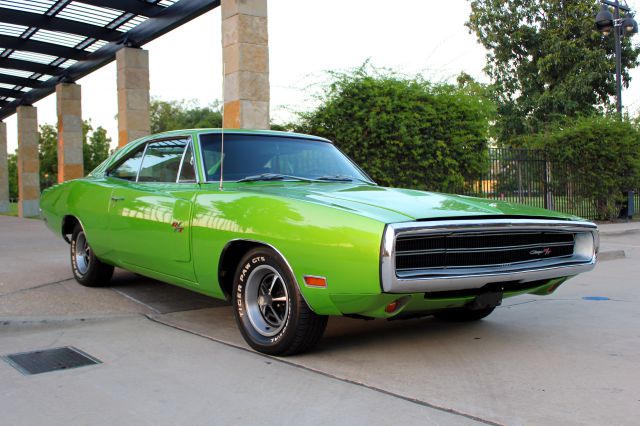
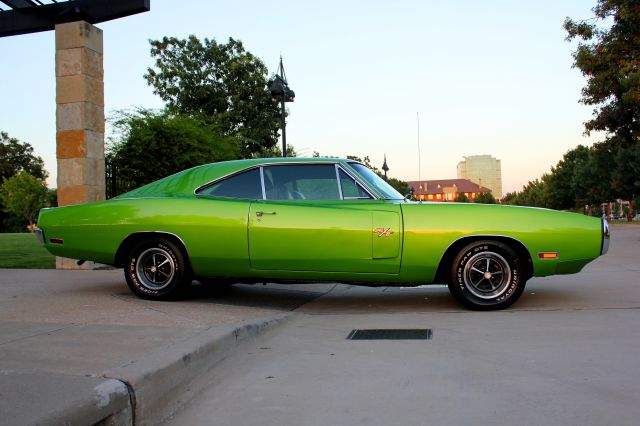
1970 Dodge Charger Unknown
Mr. Old Car, TX
P:214-680-8128
- Mileage
- 400 Miles
- Engine
- 4-cylinder, 2.0L 4CYL 4 Cyl
- Transmission
- Automatic
- Fuel
- Gasoline
- Color
- Metalic Green
- Make
- Dodge
- Model
- Charger
- Model Year
- 1970
WWW.MROLDCAR.COM 1970 CHARGER R-T 440 MATCHING NUMBERS. RESTORED AND DOCUMENTED AND REGISTERED! SHE RUNS AND DRIVES GREAT. ENGINE WAS DONE BY FRANK BUNCE (if you know him you know if you dont well .......) . Automatic, A-C, 440 4bbl. This car only has 300 miles on it since restored 6 years ago. Flow master mufflers. This car sounds amazing. over 50k spent on restoration. Thank you, www.mroldcar.com 214-680-8128 In 1970, the Charger changed slightly again. This would be the last year of the 2nd generation Charger and featured a large wraparound chrome bumper and the grille was no longer divided in the middle. New electric headlight doors replaced the old vacuum style. The taillights were similar to those used in 69, but 500 and R-T models came with a new more attractive taillight panel. On the R-T, new rear-facing scoops with the R-T logo were mounted on the front doors, over the door scallops. A new 440 or HEMI hood cutout made the option list for this year only. Dodge painted the hood scallop inserts black and put the silver engine callouts on top. New High Impact colors were given names, such as Top Banana, Panther Pink, Sublime, Burnt Orange, Go Mango and Plum Crazy (sometimes nicknamed Statutory Grape[6]). The 500 returned for another year, but as a regular production Charger unlike the limited production NASCAR Charger of 1969. Interior changes included new high-back bucket seats, the door panels were also revised and the map pockets were now optional instead of standard. The ignition was moved from the dash to the steering column (as with all Chrysler products this year), and the glove box was now hinged at the bottom instead of the top as in 1968-69. The SE Special Edition option added high end luxury to a full on muscle car and was available as 500 SE and R-T SE models. The all new pistol grip shifter was introduced, along with a bench seat, a first for the Charger since its debut. A new engine option made the Chargers list for the first time, the 440 Six Pack. With three two-barrel carburetors and a rating of 390 hp (290 kW), it was one of the most exotic setups since the cross-ram Max Wedge engines of the early 1960s. The Six Pack was previously used on the mid-year 1969 Dodge Super Bee and Plymouth Road Runner and was notorious for beating the Hemi on the street. Despite this hot new engine, production slipped again to 46,576 but most of this was due to the brand new E-body Dodge Challenger and the high insurance rates. In the 1970 NASCAR season, it was the 1970 Charger that tallied up more wins (10) than any other car, including the notorious 69 Dodge Charger Daytonas and Plymouth Superbirds, giving Bobby Isaac the Grand National Championship. Dodge was not satisfied with the results of the Charger 500. The car was not enough to beat the other aerocars on the NASCAR circuit. After months of research and development, including the aftermarket shop Creative Industries Inc., the Dodge Charger Daytona was introduced on April 13, 1969. Within hours of its unveiling, Dodge had received over 1,000 orders, despite the price point of $3,993.00 MSRP. Chrysler made many attempts at improving the aerodynamics of the 500 by adding noses rumored to be up to 23 in (580 mm) long. The Charger Daytona finally received an 18 in (460 mm) nose. The full size Charger Daytona was tested with an 18 in (460 mm) nose at the Lockheed-Martin Georgia facility. The test was a success and the project was greenlighted. The nose piece was only part of the innovation. The Charger Daytona also received a 23 in (580 mm) tall wing in rear. This wing was bolted through the rear quarter panels and into the rear subframe. The Charger Daytonas wing also helped out in an unintended way, by giving the car directional stability as well. The Charger Daytona engineering model was tested on the Chelsea, Michigan Chrysler Proving Grounds on July 20, 1969. Driven by Charlie Glotzbach and Buddy Baker, it was clocked at 205 mph (330 km-h) with a small 4-bbl. car